
How to plan a hole before you hit
Good players plan a hole from the green back to the tee. The drive serves the approach, and the approach serves the putt.
In short
Plan from the green back to the tee: first, where you want to play the approach from; then, where the drive should finish; last, the club that gets there most reliably. Decide before you hit where the good miss is.
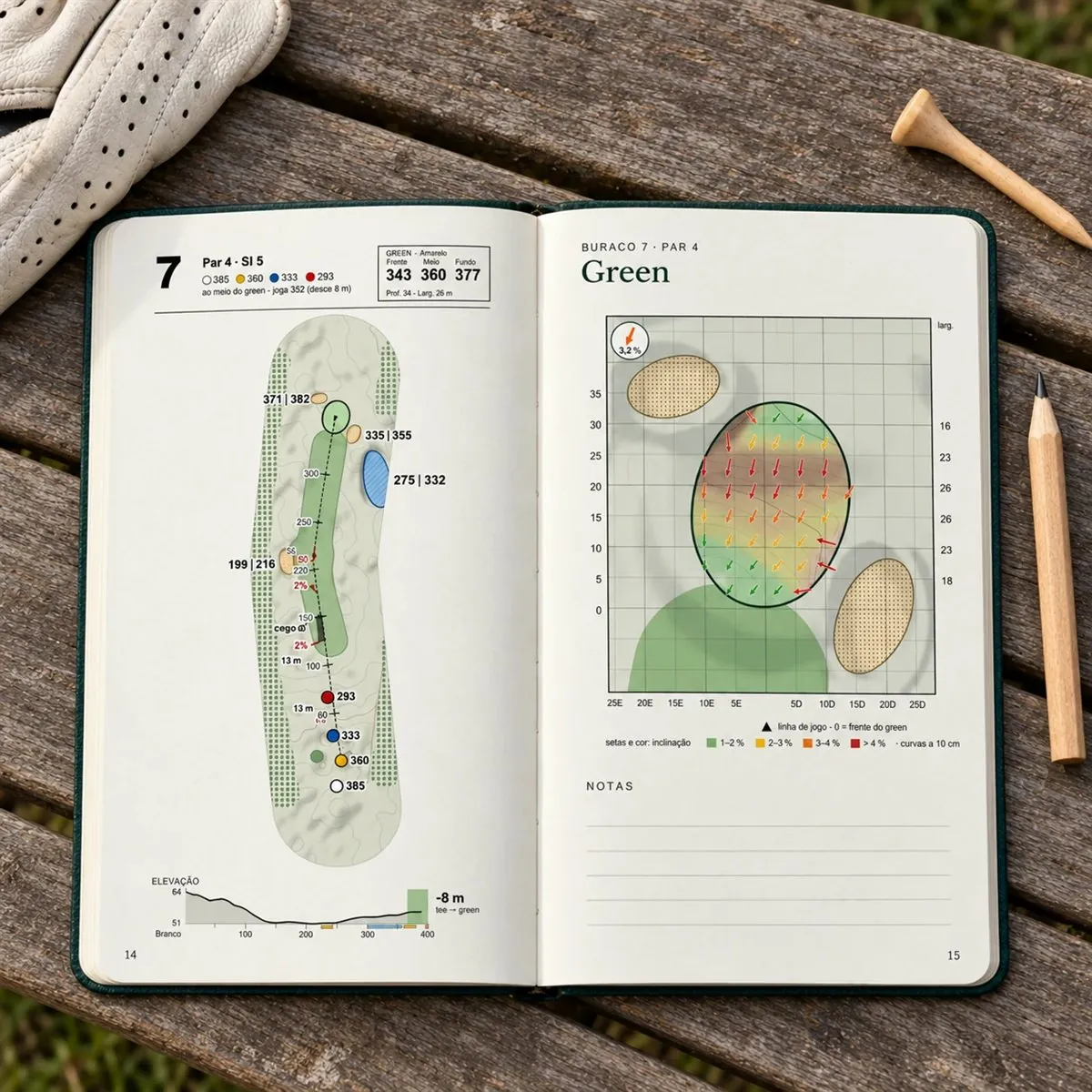
1. Start at the green
Where is the flag, and which side do you want to be on? The green page shows which way the green falls and where the bunkers are. From that comes the spot the approach is easiest from: your favourite distance and an open angle to the flag.
2. Choose where the drive should finish
With that spot in mind, look at the landing zone: fairway width, hazards, doglegs and blind spots. On hole 7 of our sample, from the yellow tee:
- the hole measures 360 m and plays 352, because it drops 8 m;
- the bunker on the left takes 216 m to carry;
- the lake on the right runs from 275 to 332 m;
- a 220 m drive to the middle of the fairway leaves 140 m to the middle of the green.
3. Pick the tee club
The tee club is the one that puts the ball in that zone most reliably, not the one that sends it furthest. Sometimes that is the driver; often it is a shorter club, which leaves a slightly longer approach but takes the hazards out of play.
4. Allow for the ground
Elevation, blind spots and wind change distances. The hole profile tells you how long it plays; blind spots tell you where you will not see the ball land. Uphill and downhill.
5. Know where to miss
No shot always comes off as planned. Decide before you hit which side is the good miss: the one that keeps the ball in play with a playable next shot. Bunkers and the safe side.
6. Take notes
After playing a hole, a short note in the book (the club you used, where the ball finished, how the green ran) is gold next time. Handwritten notes are allowed, as long as they stay in the book itself. Rule 4.3.